
Breaking Ground: From Texas Dynamite to Pennsylvania Mine Dust
A memoir of West Texas landscapes, small-town insider politics, and the women fighting to give a silenced landscape its voice back.

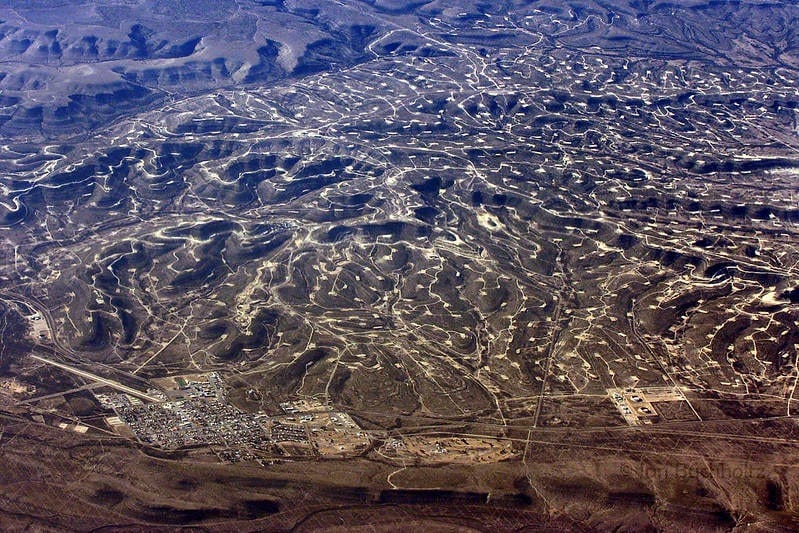
Yates Oil field Map. Iraan, Texas
The Mountains That Hold Us
When I was five years old, my grandfather, who we called Daddy, came running out of the house in Iraan, Texas late one afternoon and rousted up four of us kids, yelling, “Jump into the back of the pickup. We’re gonna go blow up some mountains.”
My younger aunt (she was four months my junior), my little brother, cousin, and I scrambled to find a safe seat in the open truck bed, squeezing our bodies between old truck tires, heavy tools, and parts of construction equipment coated with sand. My mother, little brother, and I lived with my grandparents in their large house, which sat next to a black asphalt-topped yard filled with bulldozers, caterpillars, backhoes, and excavators that we climbed on like they were sliding boards on a child’s playground.
The Yates Oilfield Legacy
My grandfather owned a highway and bridge construction business in the desert of West Texas, a major construction outfit he built to create roads that allowed trucks to haul oil, discovered in the Yates Oilfield, up the steep mesas and out of the desert. At one time, this was the largest oil discovery in the nation. Before the use of fracking, his main way of moving mountains out of his way so he could begin to lay down highways was to dynamite them.
Break them up.
As he sped across the desert under the huge blue Texas sky, we’d cling to whatever we could find that was heavy enough to keep us from falling out of the truck, squealing with excitement. The truck kicked up a massive chalky cloud of caliche dust, coating everything, including us, in a fine white powder.
The afternoon heat radiating off the canyon, mixed with the smell of hot truck oil, desert greasewood (creosote), and eventually, the sharp, sulfurous tang of exploded dynamite is still present in my memory.
When we arrived at the site, we sat together in the corner of the truck bed, holding our ears, waiting for the countdown, both afraid and excited. After setting off the blast, my grandfather, a towering man, retreated to wait for the explosion. The sound bounced off the canyon walls in a series of massive, rolling echoes, followed by the sight of heavy rock shattering and sliding down the hillside in a giant cloud of gray smoke. I felt the impact in my chest.
Years later, paleontologists are digging up dinosaur fossils in this area. At five, I thought my grandfather could move mountains. Back then, I didn’t understand that mountains held memories, that the rock beneath our feet preserved stories far older than highways or oil fields.
Infrastructure and Myth
I don’t want to think my grandfather was a bad man who destroyed the environment. Building infrastructure in the terrain around the small town of Iraan, Texas, where the land was made up of steep mesas, the legendary Pecos River, and the rugged Trans-Pecos landscape, meant heavy-duty roads and bridges were critical for oil companies trying to move the crude out to refineries in large cities. His company was vital to the entire region’s survival. Without the roads his crew carved out of the caliche and rock, getting oil from the remote Yates Field to the Gulf Coast would have been impossible. In turn, companies like Marathon and Gulf Oil swooped in and built homes for oil-field workers and their families and a wonderful school for the children.
In my eyes, my grandfather seemed almost mythic. He commanded men, machines, and explosives, and he changed the landscape. To a five-year-old, that was magical.
A Different Wounded Landscape
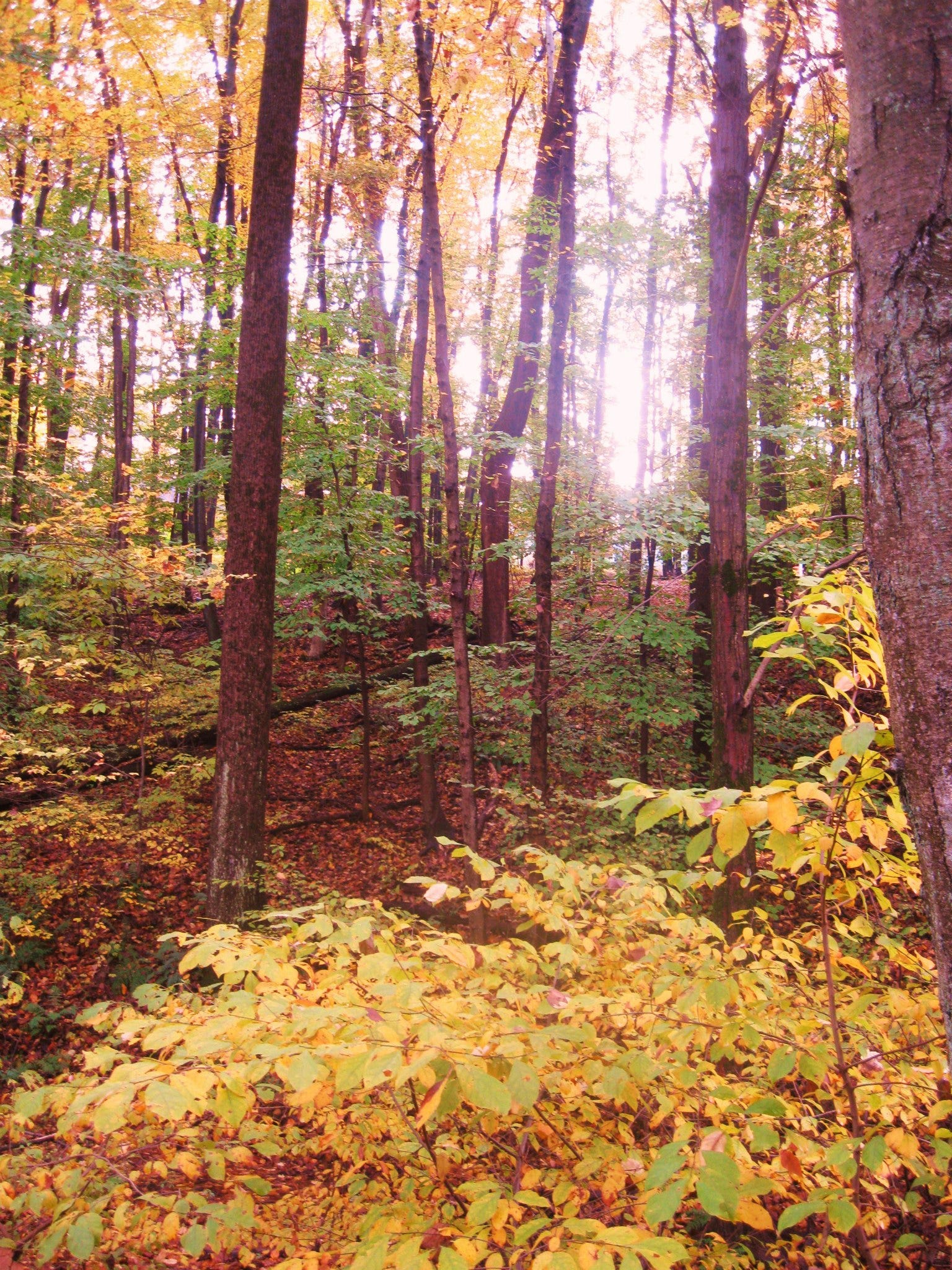
More than sixty years have passed since I rode in the back of my grandfather’s pickup to watch mountains explode. I never imagined I’d spend this time of my life standing in front of a borough council, asking another group of men to pause before disturbing a different wounded landscape. I live nearly two thousand miles away, in Cornwall, located in southeastern Pennsylvania, where developers are descending on farmland and forested areas, seeking to build homes and strip malls. The machinery is different. The language is different. But the question feels hauntingly familiar:
These days, I’m less impressed by powerful men and more taken in by the beauty of the forest that touches the edge of my neighborhood. As a child, I believed strength was measured by the power to move a mountain, but I’ve lived long enough to discover that the greater miracle is the mountain’s ability to heal. And, over the years, I’ve come to value my role as a writer who listens to the stories that move in the breeze, live in the soil, and travel through groups of trees.
The Echo of the Explosion
Two months ago, sitting in a crowded room where residents of my small village gathered to hear borough officials debate a proposed development in my neighborhood, I heard that explosion again.
This time, it was directed at me when I asked a question: Why are we allowing a developer to break ground on an untested Bethlehem Steel dump site without knowing what toxic legacy is buried in the soil? The response I got wasn’t a calm explanation of legal code. It was an eruption by the president of the planning and zoning commission, who lost control and yelled at me for questioning his priorities. His voice was deafening. For a second, I was five years old again, listening to a mountain blow up.
But this explosion was different. My grandfather used dynamite to clear a path forward. This man was using his voice to blast away a citizen’s right to ask for safety.
Historically, Bethlehem Steel operations and intensive ore mining left a heavy, invisible fingerprint of toxic chemical waste behind in the village my husband and I call home. It’s a tiny area, but the history is significant. The iron ore furnace, left over from 200 years of mining, is now a state museum, listed on the National Register of Historic Places.
I spent the next two months asking the borough to mandate soil testing, reminding them of the cost of not doing so could harm the lungs, groundwater, and safety of nearby families, as well as the safety of future families who buy homes here, and the local wildlife. My calls for testing have been treated as a bothersome request since.
Over the summer, I’ve watched our local government green-light proposals because it’s easier to capitulate to a wealthy builder than it is to stand up and invoke the Pennsylvania Constitution’s Environmental Rights Amendment, which guarantees us clean air and pure water. Many of us feel our borough officials have largely surrendered, throwing up their hands and justifying doing so by citing Pennsylvania developer-friendly statutes. They tell us they are powerless in the face of a law that favors developers, but their behavior suggests they really think their right to make money outranks a resident’s right to breathe clean air. That fundamental disconnect is infuriating. The fact that a public board cannot see, or chooses to ignore, the human reality behind their zoning maps is terrifying.
In fact, they are treating a historic heavy-industrial dump site as a blank canvas, oblivious to the fact that when this developer breaks ground, he isn’t just digging dirt; he is opening a century-old Pandora’s box of industrial toxins.
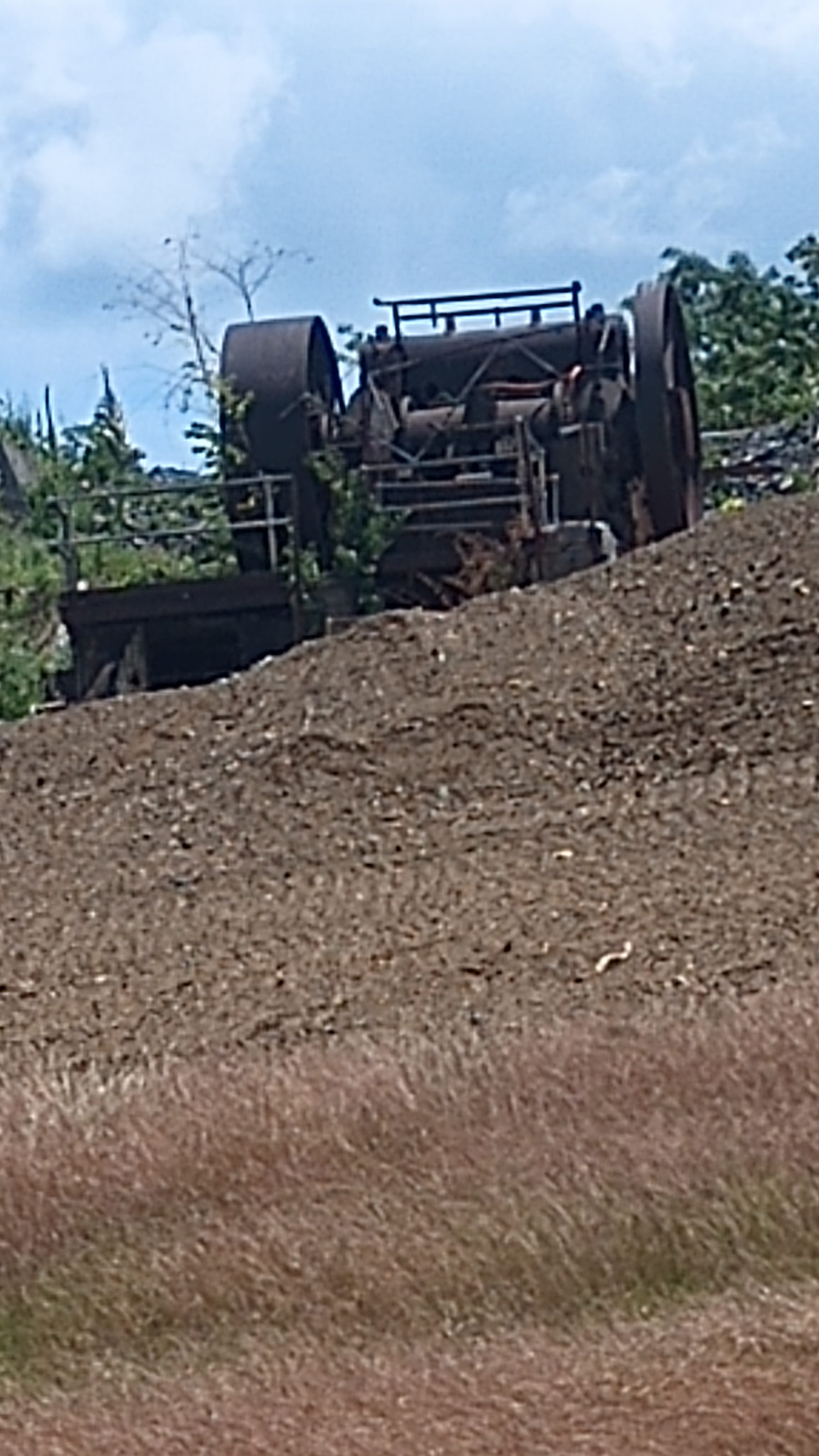
Mining Tailings at The Cliffs in Cornwall, Pennsylvania
I come from a legacy of powerful West Texas men and women who did as they pleased, but they loved the land. Their power was tethered to stewardship. What we are witnessing in our borough hall today is something entirely different. It is a small, self-aggrandizing exercise in bureaucratic cowardice. The president of the commission who lost his temper with me thought that by yelling, he could bury the question. But the dust from that meeting has settled, and we are still standing. We know the difference between breaking ground to build up a village and breaking it to strip it bare. And we will not be silenced by the noise.
Reading Between the Lines
I’m an author, a retired composition professor, and I lead groups of women, helping them to find their voice. For years, my classrooms and groups were a laboratory for the human voice. My life’s work has centered on a single, urgent question: How do we help those who have been marginalized, written over, and silenced reclaim their right to speak? I taught my students that empowerment begins with a literacy that extends beyond the ability to read words on a page, by using a critical eye to read between the lines of the power structures governing our lives.
I never expected that the most urgent text I would ever have to analyze would be a stack of municipal zoning templates, or that the voice crying out for protection would be the literal soil beneath my feet. Over the weeks as I joined with other women in the neighborhood to fight this predatory form of development, I began to see how the land had also been silenced by ordinances, rules, and laws, as well as questionable and possibly untruthful application filings with state and county agencies.
I began to question apparent conflicts of interest when votes were cast by office holders who had professional and personal relationships that crossed the lines. At one point, after delivering a letter to the borough council, I discovered one official using back-channel maneuvers behind closed doors to “reconcile” the safety concerns I had raised. He was trying to erase the questions I posed about contradictions in the developer’s plans, which revealed that he had never tested the land for the presence of toxic chemicals. In my eyes, this was a textbook system of silencing.
The Chemical Rebellion
But the land cannot lie, even if the paperwork does. Beneath that surface sits tons of undocumented mining waste and heavy sulfide deposits, specifically iron pyrite, or “fool’s gold.” When pyrite is cleared, stripped of trees, and flooded with millions of gallons of stormwater runoff, a predictable chemical rebellion occurs. It oxidizes, creating sulfuric acid and leaching toxic heavy metals straight into our shared water table and local watersheds. It triggers land subsidence and sinkholes.
The earth, when violated, does not stay silent. It screams in the language of contamination and structural collapse.
When our neighborhood coalition stood up to give voice to these facts, the machinery of small-town insider politics scrambled to quiet us. We discovered that our Borough Zoning Officer had to step aside due to his deep, historical financial ties to this very developer. Yet behind closed doors, directives were still sent, ordering engineering staff to contact state regulators to “reconcile the alleged discrepancies” we had exposed in their plans. This is how silencing works. It happens in the quiet gaps between official meetings. It happens when powerful men try to rewrite public records to protect private wallets.
But true literacy is leverage, and public records are a shield. While a few honorable public servants are sitting on our local boards who care deeply about our future, the administrative machinery of small-town insider politics is currently being weaponized to quiet the rest of us.
Returning Voice to the Land
This week, we presented the borough with a Pennsylvania Supreme Court Case that gave them the “out” to deny approval to the developer, Robinson Twp V. Commonwealth (2013). Buy. not only did the borough solicitor dismiss the case, saying it didn’t apply because the ruling was based on a case involving fracking, she advised the commission to ignore it completely. As I listened to her words, the room began to feel sterile, filled with stacks of unread paperwork, fluorescent lights making it barely possible to read even the tension in the room. Both she and the engineers for the developer continued to dodge the demand for independent Act2 testing, based on their own self-certification and the borough’s administrative evasion.
Finally, the commission president, a Vietnam Vet whose hat sat in front of him on the desk spoke, claiming, “I grew up here, there were only a few mine shafts, we breathed the air, and we are fine.” That seemed to be the final pronouncement on the question of safety and the commission moved away, focusing instead on the problem of parking, as though approval of the development was somehow merely a matter of checking boxes. In the words of the president, “I’ve listened to this question about soil testing for two months and tonight we brought it to a head and we settled it.” When he delivered his declaration on the issue of soil safety, pronouncing it a dead issue, he he didn’t use geology or law. Instead, he invoked nostalgia. He looked out at the room and explained that because he and his fellow commissioners had grown up in Miner’s Village, breathed the air, and lived to tell the tale, the underground hazards we documented simply couldn’t be that dangerous. To him, the mines weren’t a complex, shifting matrix of heavy metal tailings and microscopic actinolite asbestos fibers; they were just a few static, historical shafts dotting the backdrop of his childhood.
It was a classic display of municipal gaslighting, but as I sat there, my frustration dissolved into a sudden, profound realization. They weren’t acting out of malice; they were suffering from a severe limitation of imagination. They are trapped in a ‘don’t ask, don’t test’ posture because they literally cannot imagine a world beyond the boundaries of what they have personally lived inside a tiny, localized village. To them, if a danger didn’t announce itself with an immediate explosion during their youth, it simply does not exist.
This provincial blindness took me back to my own family history. My grandfather spent his life working with heavy explosives, literally blowing up mountains to reshape the earth for mining and demolition. He was a man of his time, focused strictly on the immediate, tangible task in front of him: moving the rock, clearing the path, and securing the day’s progress. He had no way of knowing, and no capacity to imagine, that decades later, teams of paleontologists would walk through the very fractures he left behind in those blasted mountainsides. He couldn’t conceive that scientists would scramble through his dust looking for ancient bones—clues trapped in the deep strata that could help humanity better understand both our ancient past and our ecological future.
My grandfather acted out of the limits of his era’s imagination. But today, a developer rushing to grade an unmapped iron ore tract without core testing doesn’t have the excuse of historical ignorance.
When local officials vote to green-light heavy excavation over verified mine waste based entirely on the narrow, anecdotal boundaries of their own childhoods, they aren’t just failing an administrative checklist. They are failing the future. History leaves a physical, chemical footprint beneath our feet whether we choose to look at it or not. And future generations deserve leaders who dare to look past the edges of their own backyard, ask the hard questions, and demand the empirical truth before the dust begins to rise.”
What is happening today in Cornwall is not the honest labor of building up a community; it is a calculated effort to undermine it. Pun absolutely intended.
When a developer buries the toxic truth of a landscape beneath layers of pristine, fictional paperwork, that is an act of undermining. When a public official uses back-channel directives to “reconcile” a corporate client’s lies behind closed doors, that is an act of undermining. They are fracturing the very foundations of public trust, clean water, and civic safety, hoping the ground will swallow the evidence before anyone notices the collapse.
This week, the women and families of Cornwall are no longer asking for permission to be heard. Armed with the truth, our collective voices are a force far more powerful than any corporate bulldozers. We are translating the scars of this land into a legal, organized roar—and we are building a boundary they cannot cross.
We are returning voice to the land.
Wonderful story, Jane. Thank you!