
When Language is Missing
Redaction and the Architecture of Silence

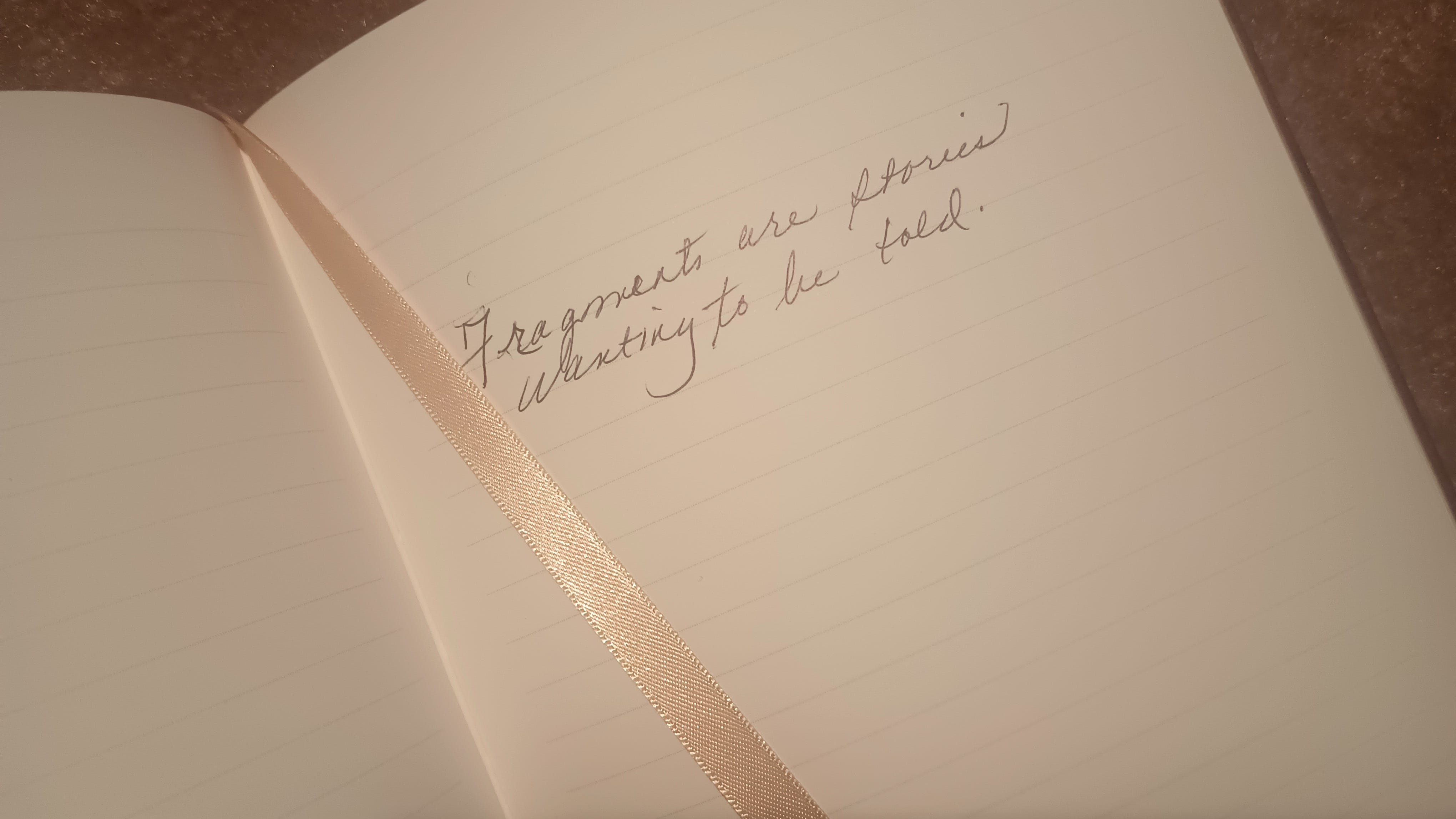
What is redacted is not erased. It waits.
As the recently released Epstein files have moved swiftly across screens and headlines—spreading through the consciousness of millions—I have found myself holding two responses at once. Transparency, in the possibility that harm once obscured is now visible. And, beneath that relief, another question has surfaced for me—one less about exposure and more about language.
About who has it. Who controls it. And who is allowed to speak.
One thing has become clear: the exposure of abuse does not automatically produce recognition. It produces transcripts. Statements. Legal arguments. Media analysis. But recognition requires something more basic: vocabulary that can hold what was lived without filtering and diluting its power.
In recent weeks, I’ve watched survivors struggle to be heard inside legal systems that demand specificity, admissibility, and proof. I’ve watched journalists search for language that meets industry standards: measured, defensible, balanced, narratively coherent. I’ve listened to public figures trying to characterize suffering in terms that are neither defamatory nor dismissive, and I’ve wondered how much of women’s lived experience can survive this process of translation.
Public dialogue, too, has its own form of redaction. Once stories enter the national conversation, they are translated into policy arguments, folded into political leverage, and expressed through cultural commentary. In the process, something subtle can occur. The lived experience of harm is flattened out. The details are rearranged like the chairs on the deck of the Titanic, in an attempt to preserve frameworks and systems that allowed it to take place.
I find myself wondering what survives that translation.
When suffering becomes a talking point, when testimony is debated more than it is received, does the original story remain intact? Or is it contorted into something else? Evidence? Strategy? There is a risk that even in our efforts to advocate for victims’ rights, we replicate a familiar pattern: the story moves away from the person who lived it and into systems that reinterpret it.
And then I think of the women who are not part of this case at all. Women whose stories will never pass through Congress. Those who will never enter a courtroom. Women whose experiences do not meet the threshold of prosecution yet altered their lives in dramatic ways.
What language is available to help them articulate the harm they’ve endured? What words exist to help them shape a story to hold the devastation they carry?
Years ago, I facilitated a writing circle for adult survivors of childhood sexual abuse in a social service agency. I remember how difficult it was for many of them to begin to write. Not because they lacked memory, but because they lacked a shared vocabulary that felt safe enough to use. For some, using the words triggered horrific memories of the abuse, making it difficult for them to even remain in the room, let alone to join in the conversation. This is where I saw, firsthand, how silence can function as a form of violence.
Legal language narrowed their stories into categories. Clinical language pathologized what they had endured. For some, spiritual language had encouraged forgiveness before clarity. They made the choice to write a group manifesto, where each voice could support the telling without isolating any one woman’s experience. This is why language formed in community matters. It precedes translation. It allows experience to stabilize before it is moved into larger arenas. In that circle, language did not have to serve policy, argument, or interpretation. It could exist before it was evaluated.
When women were unable to tell the entire story, the fragments they could share did not need to defend themselves.
There is a particular kind of disorientation that occurs when language fails in this way. Women described feeling off balance, unsure of how to orient themselves once they began to speak. It was not only the memory that unsettled them, but the instability of the vocabulary available to describe it.
When the words we have been given don’t steady us, the body often registers the loss first. But—and this is important in my work—I have learned not to rush that moment. Fragments are not failures of language. They are sparks of stories wanting to be told.
When I saw this in my groups, I learned to slow the room down, to help writers return to breath and body before returning to the page. And, as they worked together, I understood that when language does not yet exist, community becomes the first scaffold.
I have carried that lesson with me ever since.
It is not only survivors inside legal systems who struggle with language. I have seen women in spiritual circles defer to words that soften their suffering by encouraging them to contextualize, transcend, or reframe. I have watched women hesitate before naming harm plainly, as though the act of speaking might itself be a violation of some unspoken rule.
Learning to talk about what happened can take years.
And so, I find myself thinking about linguistic inheritance.
Mary Daly once argued that women cannot rely on inherited language to describe their reality. She didn’t merely critique patriarchal vocabulary; she invented new words because she believed women needed linguistic sovereignty to exist fully.
And then I think of Mary Magdalene, a woman who, in early Christian texts, bore witness to resurrection. Over time, her voice was reshaped, conflated, and diminished by institutional narratives that overtook the church. A witness was reinterpreted. Silenced. Erased.
What happens when women who witness history are later redefined? Called hysterical? Or their stories are characterized as confabulation or worse?
I sometimes wonder whether that pattern echoes quietly in us still. As though something unspoken has settled into the bones of women who sense that speaking plainly may invite distortion, suspicion, or erasure. As though we have inherited a caution that predates our own existence.
Perhaps this is why so many women soften their language. Perhaps this is why we find it easier to qualify ourselves, to defend our claims, and, eventually, yield to a dominant story.
The crisis exposed by these files is more than moral. It is linguistic. And this may be the biggest threat to women.
Even the documents themselves arrive marked by absence. Pages released to the public are partially blackened, names of the perpetrators withheld, sentences obscured. Redacted.
What does it mean that the record of harm is literally visible and yet unreadable?
A black bar does not erase what happened. It simply controls who may access it.
In this way, redaction becomes a metaphor for a larger pattern. Women’s experiences are not always denied outright. They are often acknowledged in fragments. Visible but obscured, documented but inaccessible, spoken but not fully heard.
We are permitted to know that something occurred, but we are not permitted to see it clearly.
And many women live this way internally. Parts of their stories are legible. Other parts remain blacked out—not because they didn’t happen, but because no language felt safe enough to reveal the truth. Perhaps what is being exposed here is not only a network of power, but a pattern we have long lived with.
Still, exposure alone does not create safety. That begins much earlier, when a child has language for what feels wrong. Or when a teenager has vocabulary that doesn’t require self-blame. When a young woman doesn’t need a courtroom before she can trust her own words.
When recognition comes before resolution. Or when story is as important as system.
If we are serious about protecting children and young women, we will not only demand accountability after harm is revealed. We will cultivate language that makes recognition possible sooner.
Because silence is rarely empty.
It is often structured. It is expected by a culture that prefers not to know and reinforced by linguistic practices that cause women to forget or dismiss their experiences because they don’t have the language to name them.
If protection begins with recognition, then the language we cultivate now matters. The words we make available will shape what can be named, and therefore what can be interrupted.
Perhaps this moment will ask something of us beyond outrage or accountability. Perhaps it will ask us to help form a vocabulary that steadies our daughters, or to listen as they form one for us.
And when language finally forms, often when it grows out of a community of safety, something shifts. What was once unspeakable becomes shareable. What was once isolated becomes witnessed. Maybe protection begins within a safe circle of witnesses who accompany us across the threshold from silence into story.
This is so meaningful Jane. Thank you. I’m going to read what you’ve shared multiple times. Profound and deeply helpful.
Thank you for going in depth with this. It occurs to me that a feminist ethnologist needs to gather these stories of the women who survived Epstein and use the qualitative method of “Testimonio”to present them to the world.